
Real Costs, Manufacturer Warranties, and What To Expect From Tear-Off To Final Walkthrough
For most homeowners in the northeast Cincinnati suburbs, the roof isn’t a cosmetic feature. It’s a component of the single largest financial asset they own. With median home values in the area sitting around $396,000, a roof replacement in Cincinnati isn’t an impulse purchase. A typical $15,000–$24,000 project works out to roughly 4–6% of that asset’s value, and it deserves the same scrutiny a homeowner would apply to any five-figure financial decision.
Guaranteed Roofing knows what actually drives the cost of a new roof in Cincinnati, OH, how local climate conditions affect shingle lifespan, and how to tell the best roofing companies apart from those relying on pressure and vague promises. We’ll also go over what to expect on installation day, including the one question most homeowners are afraid to ask out loud: Will I still be able to work from home that day?
Why Cincinnati’s Climate Wears Down Roofs Faster Than People Expect
The Ohio River Valley climate puts a specific kind of stress on asphalt shingle roofs that homeowners moving from milder regions often underestimate.
Freeze-thaw cycling. Cincinnati typically sees dozens of freeze-thaw cycles each winter, days when temperatures cross above and below freezing repeatedly. Water that seeps into small cracks in shingles or flashing expands as it freezes, widening those cracks each cycle. Over a 20-year roof life, this is one of the primary mechanical causes of shingle failure, distinct from simple age-related wear.
Hail season. Spring and early summer bring the highest hail risk in the region, and Greater Cincinnati has seen measurable hail events in recent years. Hail bruises shingles in ways that aren’t always visible from the ground: granule loss and mat fracturing can go unnoticed for months before a leak develops.
Summer UV exposure. Cincinnati summers combine high humidity with sustained UV exposure that breaks down asphalt oils over time, making shingles more brittle heading into the next freeze-thaw season. This is why a roof’s effective lifespan is a product of both age and the specific stress cycles it has been through, not a fixed number on a calendar.
What this means practically: homes built in the 1978–1995 range in neighborhoods like Beckett Ridge and Mason are now sitting in the 30–45 year range from original construction, and if they still carry original or first-generation replacement shingles, most are well past the rated lifespan of standard 3-tab products. Freeze-thaw and hail exposure compound on each other over time, so a roof that has been through several bad storm seasons back to back often shows wear well ahead of its calendar age. If you’re seeing granules in your gutters, curling shingle edges, or daylight through the attic decking, that’s climate-driven wear catching up with the calendar.
Signs You Actually Need a Replacement, Not Just a Repair
Not every roof problem calls for a full replacement, and a legitimate contractor will tell you that plainly. Replacement generally becomes the right call when:
- Shingles are curling, cracking, or missing across multiple slopes rather than in one isolated spot.
- Granule loss is heavy enough that you can see bare asphalt substrate.
- There's evidence of decking damage: sagging, soft spots, or daylight visible from the attic.
- The roof is at or past 20–25 years old (standard architectural asphalt shingle), and repairs would be patching around widespread underlying wear.
- Multiple leaks have appeared in different areas within the same season.
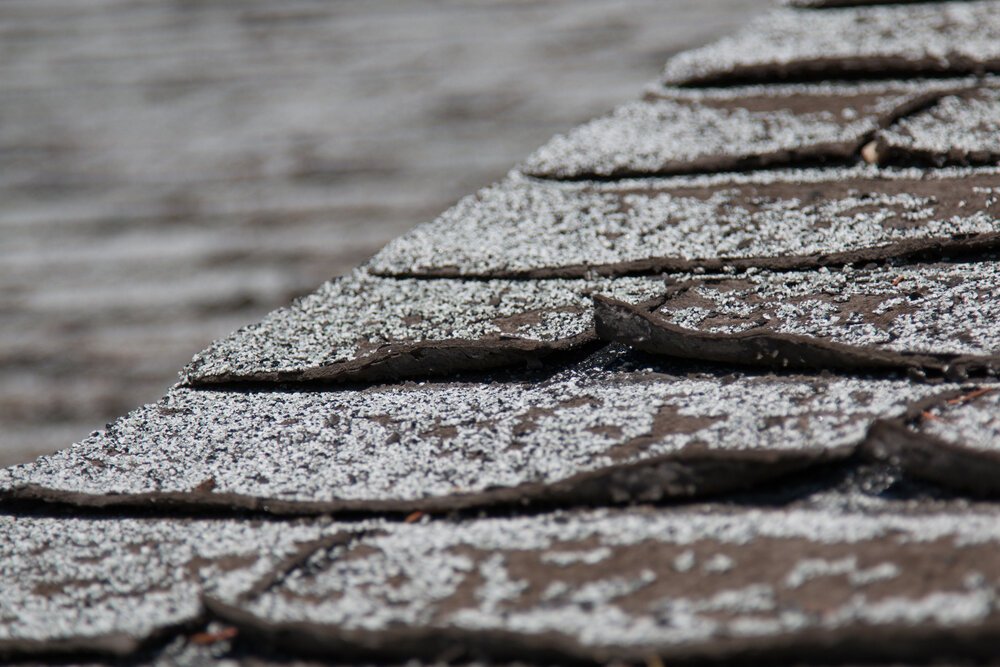
If your roof shows isolated damage, such as a single storm-damaged section or a flashing failure around one chimney, a repair may be the more accurate call. It’s worth getting a written explanation of why a contractor is recommending one over the other rather than taking either recommendation at face value, and a professional roof inspection is the most reliable way to get that written explanation before committing to either path.
How Much Does a New Roof Cost in Cincinnati, OH?
This is the number most homeowners actually want when researching a new roof replacement in Cincinnati, OH, and too many contractor websites avoid giving it. For a deeper breakdown by ZIP code and home size, see the 2026 Cincinnati roof replacement cost guide. Here’s an honest, itemized range for a typical 2,000–2,800-square-foot home with architectural asphalt shingles, the most common size and material combination for homes throughout Greater Cincinnati.
Typical Line-Item Cost Breakdown
Cost Component | Typical Range | Notes |
Materials (architectural shingles) | $4,500 – $7,500 | Varies by manufacturer tier and wind/impact rating |
Labor (installation) | $4,000 – $7,000 | Reflects crew size, roof pitch, and complexity |
Tear-off and disposal | $1,000 – $2,500 | Depends on number of existing layers being removed |
Underlayment, flashing, ventilation | $1,500 – $3,000 | Often the most skipped line item on lowball quotes |
Permits | $150 – $500 | Varies by county and local municipality |
Accessories (drip edge, pipe boots, ridge vent) | $500 – $1,500 | Small individually, meaningful in aggregate |
Total (typical range) | $15,000 – $24,000 | For 2,000–2,800 sq ft with architectural shingles |
Per-square-foot benchmark: most Cincinnati homeowners in this segment should expect to see quotes in the $6.50–$9.50 per square foot range for architectural asphalt shingle replacement, all-in. Quotes significantly below that range are worth asking hard questions about, specifically whether tear-off, permit costs, and full underlayment replacement are actually included, or whether they’ve been left off to make the number look better on paper.
What moves the number up or down:
- Roof pitch and number of stories (steeper, taller roofs mean more labor time and safety equipment)
- Number of layers being torn off (a second or third layer adds disposal cost)
- Decking condition: if plywood or OSB sheathing needs replacement due to rot or damage, that’s an added cost only visible once the tear-off begins
- Complexity of the roofline (dormers, valleys, chimneys, and skylights all add labor and flashing work)
- Shingle tier selected (builder-grade 3-tab vs. architectural vs. premium designer lines)
A written, itemized estimate that breaks out each of these categories, rather than a single lump-sum number, is the clearest signal that a contractor is pricing the actual job in front of them rather than quoting from a generic template.
What a Written Estimate Should Actually Include
Not all “written estimates” are created equal. A single-page document with one total number is technically written, but it doesn’t give a homeowner anything to evaluate. A complete estimate should include, at a minimum:
- The specific shingle manufacturer and product line, not just "architectural shingle"
- Square footage of the roof being replaced, not the square footage of the home
- A separate line for tear-off and disposal, including how many layers are being removed
- Underlayment type and whether ice-and-water shield is included in valleys and around penetrations
- Flashing scope: which areas get new flashing versus reused flashing
- Ventilation components, including any changes to existing ridge or soffit vents
- Permit costs and confirmation of who is filing for the permit
- Payment schedule and what triggers each payment
- Warranty terms in writing, both the manufacturer’s warranty and any separate workmanship warranty from the contractor
A homeowner comparing two quotes with wildly different totals can usually explain the gap by checking this list against each one. Missing line items, not necessarily bad workmanship, are the most common reason one quote looks cheaper than another.
Financing a Roof Replacement

Not every homeowner wants to pay for a $15,000–$24,000 project in a single transaction, even when the funds are readily available. Financing a roof replacement rather than paying cash outright can make sense for reasons that have nothing to do with affordability: some homeowners prefer to keep cash reserves liquid for other investments, and others simply prefer to spread a large home expense across a longer timeline for cash-flow planning. Ask any contractor you’re considering whether they offer financing directly, what the approval process looks like, and whether the terms are fixed or variable before you sign anything. A contractor who can walk you through financing options clearly, the same way they walk you through material costs, is applying the same standard of transparency to the payment side of the project.
Owens Corning vs. CertainTeed: What the Manufacturer Comparison Actually Means for Your Warranty
Shingle brand isn’t just a preference question. It determines what warranty protection is available to you as the homeowner, and that protection is only as strong as the installing contractor’s certification status.
Owens Corning Preferred Contractor status requires a contractor to maintain a documented installation history, complete manufacturer training, and pass ongoing quality review. For homeowners, installation of Owens Corning shingles by a Preferred Contractor is often what unlocks extended workmanship warranty coverage beyond the standard materials-only warranty, meaning both the shingles and the labor that installed them are covered if something fails.
CertainTeed SELECT ShingleMaster designation works similarly: it requires verified training, a minimum volume of documented installations, and adherence to CertainTeed’s installation standards. Homeowners working with a SELECT ShingleMaster-certified contractor typically qualify for CertainTeed’s stronger warranty tiers, which again extend coverage to workmanship rather than materials alone.
The distinction that matters here: a homeowner who hires an uncertified contractor to install Owens Corning or CertainTeed shingles is often still covered only under the base materials warranty, not the extended workmanship protection tied to certified installation. The manufacturer’s credentials are not a resume line for the contractor. It’s a direct determinant of what happens if a problem shows up five or ten years into the roof’s life.
Comparing the Two at a Glance
Factor | Owens Corning (Preferred Contractor install) | CertainTeed (SELECT ShingleMaster install) |
Wind rating (architectural shingle lines) | Up to 130 mph on qualifying products | Up to 130 mph on qualifying products |
Impact resistance options | Class 3 and Class 4 impact-rated lines available | Class 3 and Class 4 impact-rated lines available |
Extended workmanship coverage | Available only through Preferred Contractor installation | Available only through SELECT ShingleMaster installation |
Warranty transferability | Transferable to a new owner within specified terms | Transferable to a new owner within specified terms |
Both manufacturers offer Class 4 impact-resistant product lines, which is worth noting given regional hail exposure. Some insurance carriers offer premium discounts for Class 4 shingle installations, which is worth confirming directly with your carrier before selecting a product line.
Shingle Color and Style in HOA-Governed Communities
Material and warranty aside, color and style selection deserve their own attention for a reason specific to this part of Cincinnati: many established subdivisions in the northeast suburbs are HOA-governed, and exterior changes, including roof color and shingle style, often require architectural review before work begins.
A contractor familiar with the process can tell you upfront whether a specific product line or color has already been approved in your neighborhood or whether it needs a fresh submission, which can affect your project timeline by several weeks if it isn’t caught early. Architectural shingles in neutral, traditional tones tend to clear HOA review with the least friction, though every association’s guidelines are different and worth checking directly rather than assuming.
What to Expect During Roof Replacement, Especially If You Work From Home
Roughly half of homeowners in this part of Cincinnati work remotely or in a hybrid arrangement, which means the roof over their head is also the ceiling over their workday. The most common hesitation about scheduling a replacement isn’t cost. It’s a disruption.
Here’s what an honest day-by-day expectation looks like for a typical single-family home:
Before installation day: A contractor should walk you through the full schedule in advance, including which specific hours will involve the loudest work (tear-off and nailing) versus quieter finishing work. This lets remote workers plan calls and focused work blocks around the noisiest window rather than guessing.
Morning: Crew arrival, material staging, and protective setup around landscaping, siding, and gutters, including tarps or plywood over flower beds, pool covers, and any outdoor furniture that couldn’t be moved in advance. Tear-off begins. This is the loudest phase of the day.
Midday: Decking inspection and any necessary repairs, followed by underlayment and flashing installation. Noise typically decreases from the tear-off peak but continues intermittently.
Afternoon: Shingle installation, ridge vent and cap work, and cleanup, including a magnetic nail sweep of the property.
End of day: A walkthrough with the project lead covering what was completed, any decking issues discovered, and how they were handled, and next steps if the job spans more than one day.
After the crew leaves: A legitimate contractor registers the manufacturer’s warranty on your behalf and provides documentation confirming it’s active, rather than leaving that step to the homeowner. Ask for that confirmation in writing before final payment, not after.
Most standard residential replacements in this size range complete in a single day; homes with steep pitches, multiple layers to remove, or complex rooflines may run into a second day. A contractor who gives you this level of specificity in advance, rather than a vague “we’ll be there sometime in the morning,” is planning around your household, not just their crew schedule.
Will Homeowners Insurance Pay for My New Roof?
The honest answer is: it may depend entirely on the cause of damage, and any contractor who implies otherwise upfront is not giving you accurate information.
Typically covered: Sudden, specific damage events such as hail impact, wind damage from a documented storm, or a fallen tree limb. If your roof has documented storm damage within your policy period, there’s a reasonable basis for a claim.
Typically not covered: Gradual wear and aging. Insurance policies are built around sudden loss, not deferred maintenance. A 25-year-old roof that has simply reached the end of its material life is very unlikely to be covered, regardless of how the claim is framed.
What actually helps a claim:
- Dated photo documentation from before and after a specific storm event
- A written roof inspection report from a licensed roofing contractor establishing the extent of damage
- Prompt filing, since insurers scrutinize claims filed long after a storm event more closely
- A copy of your policy’s specific wind and hail deductible
Be cautious of any contractor who suggests insurance “will definitely cover it” before an adjuster has actually reviewed the damage. That’s a pattern associated with storm-chasing operations, not established local contractors who plan to be in business and honor warranties a decade from now.
One more distinction worth understanding before an insurance claim is filed for your new roof: Does your policy pay actual cash value or replacement cost value for roof damage? Actual cash value factors in depreciation, so an older roof’s payout can be significantly lower than the cost to replace it. Replacement cost value policies pay closer to the full cost of a new roof, sometimes with a smaller holdback released after the work is completed. This is worth confirming with your carrier well before storm season, not after damage has already occurred.
What Sets the Best Roofing Companies in Cincinnati Apart
Once you’ve confirmed you need a replacement and understand the real cost range, the remaining decision is who does the work. Across Greater Cincinnati, the roofing companies that consistently earn repeat business and strong local reputations tend to share the same handful of traits. A few evaluation points carry more weight than the marketing language most contractor sites lead with:
Named, verifiable manufacturer credentials. “We’re certified” means nothing without naming which certification, from which manufacturer, and what it requires. Owens Corning Preferred Contractor and CertainTeed SELECT ShingleMaster status are both independently verifiable and both require documented training and ongoing review. Ask any contractor to show proof, not just state the claim.
Written, itemized estimates delivered before you sign anything. A number without a breakdown is not an estimate. It’s a guess dressed up as one.
Who pulls the permits? Established contractors handle permitting with the local jurisdiction as a standard part of the process, whether the project is in Hamilton, Warren, Butler, or Clermont County. Skipping permits is a shortcut some storm-chasing operations take, and it leaves the homeowner exposed if there’s ever an issue with the work down the line.
Documented local project history. A contractor who can point to specific completed work in your own neighborhood, not just “the Cincinnati area” broadly, has an actual track record with your specific type of home, including familiarity with local HOA requirements where applicable.
Reviews with real context. A five-star rating with no detail is easy to manufacture. Reviews that mention specific neighborhoods, specific project types, or specific outcomes are harder to fake and more useful to evaluate.
Red Flags Worth Taking Seriously
- Pressure to sign same-day with "today only" pricing
- Refusal to provide a written, itemized estimate
- Vague claims about certification without naming the manufacturer or program
- Insistence that insurance will cover damage before any adjuster review has occurred
- Door-to-door solicitation immediately following a storm event in your area
Guaranteed Roofing: Among the Best Roofing Companies in Cincinnati for This Job
Guaranteed Roofing holds Owens Corning Preferred Contractor and CertainTeed SELECT ShingleMaster status, both credentials requiring documented installation training, verified project volume, and ongoing quality review by the manufacturer. Both directly affect the extended warranty coverage available on the finished work, the same warranty distinction that separates installation by a certified contractor from an uncertified one.
Guaranteed Roofing was founded in 2009 and is led by Jason Grimes, a third-generation contractor who learned the trade from his father and grandfather in the Cincinnati area. That background shows up in the day-to-day process: the person who assesses your roof is an experienced tradesman, not a commissioned salesperson, and the quote you receive is delivered on the spot with a clear explanation of materials, workmanship, and timeline rather than a follow-up call days later.
On the reputation side, the numbers are publicly verifiable rather than self-reported marketing copy. Guaranteed Roofing holds a 4.9-star Google rating across more than 174 reviews, an A+ Better Business Bureau rating, and the Angie’s List Super Service Award in four separate years. The company is licensed and insured in Ohio, and that status is stated explicitly rather than left implied. The company has completed roof replacement projects throughout the Cincinnati suburbs, from Mason to West Chester, and pulls permits directly with the relevant local jurisdiction as a standard part of every project rather than an optional step. Every estimate is written and itemized, delivered on the spot by the person who actually assessed the roof, not a separate sales representative working on commission, with no upselling or pressure tactics added after the fact. For homeowners comparing roofing companies in Cincinnati, that combination of verifiable manufacturer credentials, a public track record, and on-the-spot written pricing is the clearest differentiator to look for.
The Best Time of Year to Replace a Roof in Cincinnati
Timing isn’t just a scheduling convenience. It affects material performance and how quickly a crew can complete the work safely.
- Spring and fall generally offer the most stable temperature and humidity conditions for shingle adhesion, since asphalt shingles seal properly within a specific temperature range.
- Summer replacements are common and generally successful, though extreme heat can make shingles softer and more prone to scuffing during installation.
- Winter replacements are sometimes necessary after storm damage, and a reputable contractor can complete them safely, but cold temperatures slow the sealing process and may call for additional steps to get a proper seal.
For homeowners who have some flexibility on timing, scheduling outside of peak storm season (and outside the busiest weeks for local contractors) can also mean a shorter wait between the initial inspection and the actual installation date.
Protecting Your Roof After Installation
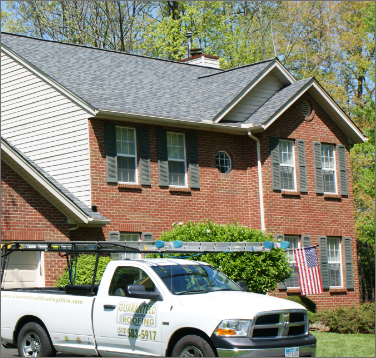
A new roof is the start of a maintenance relationship, not the end of one. Twice-a-year seasonal checks, especially after major storms and before winter, catch small issues (a lifted shingle tab, a clogged valley, debris pooling near a downspout) while they’re still cheap to fix. Homeowners who schedule a routine roof maintenance check rather than waiting for a visible leak tend to get closer to the full rated lifespan out of their new shingles, since minor problems caught early rarely turn into the kind of deck damage that shortens a roof’s effective life. It’s also the easiest way to keep a manufacturer’s warranty in good standing, since some warranty terms specify a minimum standard of upkeep.
Gutters play a bigger role in roof longevity than most homeowners assume. Water that backs up against the roofline because of a clogged or poorly pitched gutter system can work its way under shingles and drip edges over time, so gutter cleaning and maintenance is really an extension of roof maintenance rather than a separate task. Homeowners who treat both as a single seasonal routine tend to avoid the slow, hidden kind of water damage that’s harder to catch during a quick visual check.
Frequently Asked Questions
How much does a new roof cost in Cincinnati?
For a typical 2,000–2,800-square-foot home with architectural asphalt shingles, most homeowners should expect a total range of $15,000–$24,000, or roughly $6.50–$9.50 per square foot, depending on roof complexity, layers being removed, and material tier selected.
How long do roofs last in Ohio's climate?
Standard architectural asphalt shingles are typically rated for 25–30 years, but Cincinnati’s freeze-thaw cycles, hail exposure, and summer UV load tend to accelerate wear compared to milder climates. Homes built in the 1978–1995 range are commonly now past the effective lifespan of their original or first-replacement shingles.
Does homeowners’ insurance cover a roof replacement?
Only in specific circumstances, generally sudden damage from a documented storm event, hail, or wind. Gradual age-related wear is typically not covered under standard homeowners policies.
How long does roof replacement take?
Most standard residential replacements in this size range are completed in a single day. Homes with steep pitches, multiple existing shingle layers, or complex rooflines may require a second day.
What's the difference between a roof repair and a full replacement?
Repair is appropriate for isolated, localized damage. Replacement becomes the right call when damage is widespread across multiple roof sections, when the decking itself shows signs of compromise, or when the roof has reached the end of its rated material life.
What does Owens Corning Preferred Contractor status actually mean for me as a homeowner?
It means the contractor installing your roof has met manufacturer requirements for training, documented project volume, and quality review, and that installation by a Preferred Contractor is typically what unlocks extended workmanship warranty coverage beyond the base materials warranty.
How do I find the best roofing companies in Cincinnati?
Look for named, verifiable manufacturer credentials (such as Owens Corning Preferred Contractor or CertainTeed SELECT ShingleMaster), written itemized estimates rather than lump-sum quotes, documented project history in your specific neighborhood, and contractors who pull permits directly rather than skipping that step.
Can I finance a roof replacement instead of paying up front?
Yes. Many established Cincinnati roofing contractors offer financing options that let homeowners spread the cost over a longer timeline rather than paying the full amount at once. Ask about approval requirements and whether the terms are fixed before signing anything.
Why do roofing quotes for the same house vary so much?
It’s usually because of what’s missing rather than what’s included. Two quotes with a large gap in price often reflect different assumptions about tear-off layers, underlayment quality, flashing scope, or whether permit costs are built in. Comparing quotes line by line against a full itemized breakdown, rather than comparing bottom-line totals, is the only reliable way to tell whether a lower quote is a better deal or just a thinner one.
Get a Written Inspection Summary, No Obligation
If you’re not sure yet whether your roof needs repairs or a full roof replacement, the most useful next step isn’t a sales call. It’s a documented inspection. Guaranteed Roofing provides a no-obligation assessment where we document exactly what we find on your roof, and you keep the written summary regardless of what you decide to do next.